
The dirt on dirt: choosing the right soil for your houseplants
One of the most common misconceptions we encounter is that all soil is created equal. While it would be incredibly convenient if allof our houseplants could use the same soil, that is just not the best practice. (If only plants made things that easy for us!) Different plants have different needs when it comes to moisture, drainage, and airflow.
So how do you know which one is right for your different plants? We’re going to break that down a little bit for you today.
Most potting soil is made up from a combination of these components:
Peat moss or coco coir – helps retain moisture
Perlite – adds drainage and keeps soil from becoming compacted
Orchid bark – creates air pockets and improves drainage
Pumice – adds drainage and structure
Worm castings/compost – adds organic matter and nutrients
Charcoal – helps absorb extra moisture, improves airflow, and provides structure
Once you learn what each of your houseplants need, you can start to assemble the perfect soil for them using these components. Yes, it can get a little nerdy; we’re okay with that.
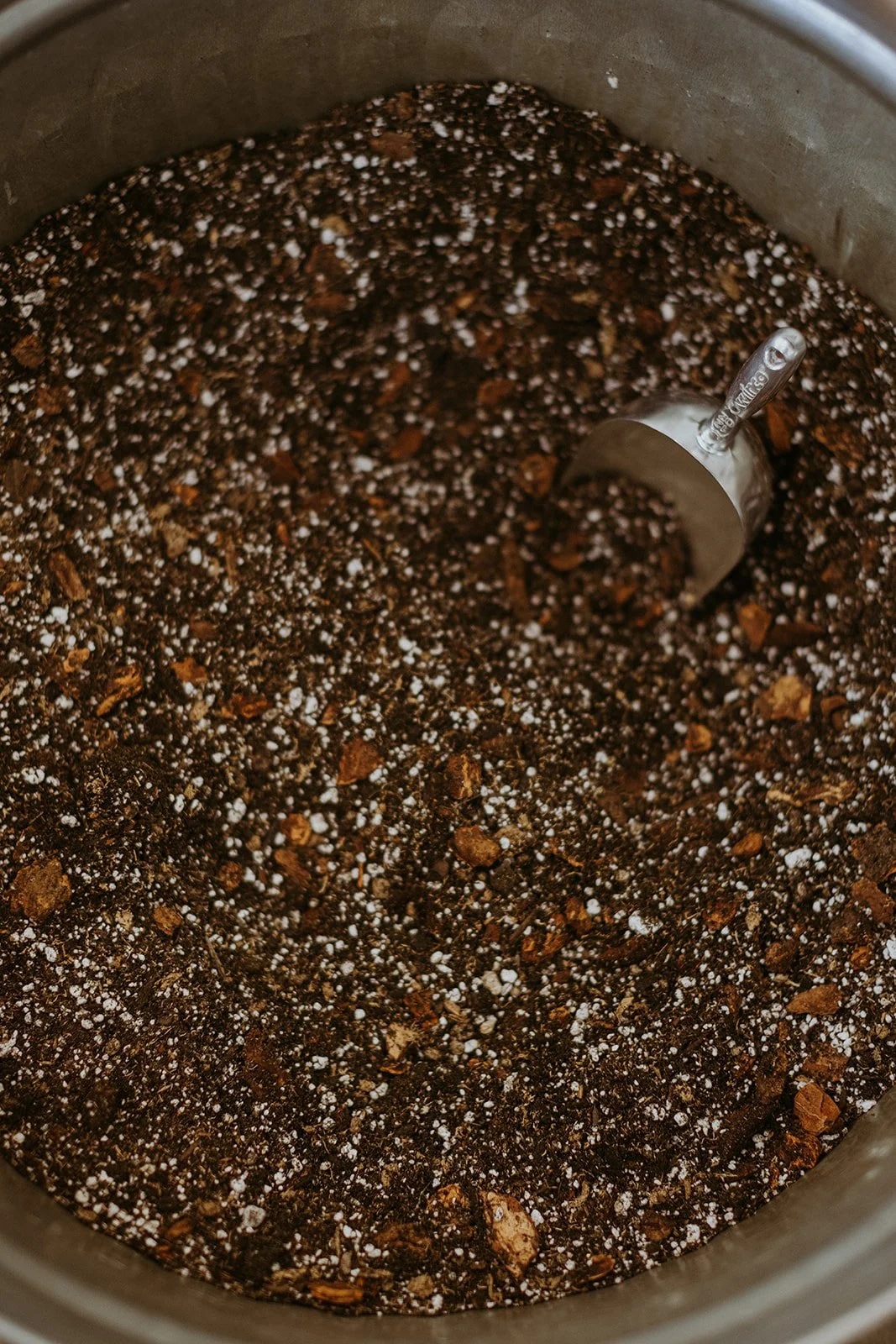
To keep it simple, let’s focus on the main types of houseplants: aroids, other tropicals, ferns, hoyas, succulents/cacti, and orchids.
Aroids (Monstera, Philodendron, Pothos, etc): They like a chunky, airy, and well-draining mix.
Other Tropicals (Peperomia, Dieffenbachia, Calathea, etc.): These need a balance between moisture-retentive soil and well-draining.
Ferns: Ferns like to stay consistently moist, so they need a moisture-retentive soil that doesn’t get soggy.
Hoyas: They prefer a mix that is very airy and fast-draining.
Succulents/Cacti: Cactus and succulents do not like to sit in water, so they should have a mix that is fast-draining and gritty.
Orchids: Orchids need super a super chunky mix - typically just bark.
One of the terms that comes up regularly when talking about soil is “well-draining”. This does not mean the water just pours straight through your soil. It means that it doesn’t sit in the soil for long periods of time around your plant’s roots. Your plant wants a drink, not a swamp.
You might be wondering, how do I manage different soil when I have 75 houseplants? The good news is that for a lot of these plants, you can make minor modifications to a base soil depending on the specific plant. Or even better, come in for a visit and we can whip up a blend perfect for your needs. We’ll even do the potting for you! Because we fully support letting someone else deal with the dirt sometimes.
Ultimately, it is important to know that there is no magic recipe for soil. These are great guidelines, but your individual soil needs can change based on your home’s light, humidity levels, watering habits, and the pot you have your plant in. We’d love to nerd out with you at the shop if you have more questions!
Next week, we’ll talk about how pot choice affects your plant’s care needs.