
Plant SOS: Fungus Gnats
What To Do About Fungus Gnats?
This time of year it seems like fungus gnats always make a resurgence. Continue reading for everything you need to know about fungus gnats and how to deal with them.
1. What Are Fungus Gnats?
Fungus Gnats are tiny little flies that commonly infest indoor plants as they’re attracted to damp soil. The adults are mostly harmless, but are awfully annoying with how quickly they can multiply and fly around your home. Basically, they’re the houseguests who refuse to leave and somehow keep inviting their friends over.
2. How Do They Get Into My Plants?
Fungus gnats can enter your home in a variety of ways: they can come home with a new plant (especially one that has been in wet soil — looking at you, Home Depot); they can come in your potting soil; they can enter through doors and windows in your house. Having a fungus gnat issue doesn’t mean you got a dud plant; it’s unfortunately just a part of plant ownership. Thankfully, they are relatively easy to treat.
3. How Do You Get Rid of Them?
Ridding your plants of fungus gnats requires a few different types of treatments. Once you are seeing the adult bugs flying around, you already have eggs in your soil, so you need to treat both issues. First, catch the adults using yellow sticky traps. Next, treat the soil. I recommend watering using 1 part hydrogen peroxide to 4 parts water for the next few waterings to kill eggs and larvae living in the soil. The most important thing you can do, though, is make your plants less appealing to the gnats in general. As I mentioned earlier, gnats love wet soil. Coincidentally, most plants actually prefer to dry out in between waterings, so make sure that you are allowing the top of the soil to dry out as appropriate and ensure your pots have proper drainage to prevent soggy soil.
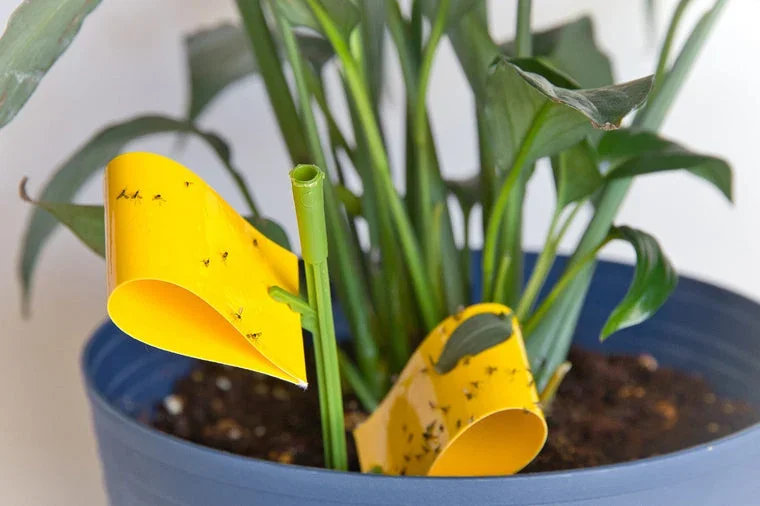
Fungus gnats are annoying, but they don't mean your plant is doomed. Don't panic. Don't throw out your plant. And definitely don't declare war on your entire houseplant collection. Fungus gnats are frustrating, but they're manageable. With sticky traps for the adults, treatment for the soil, and a little attention to watering habits, you can get things back under control.